

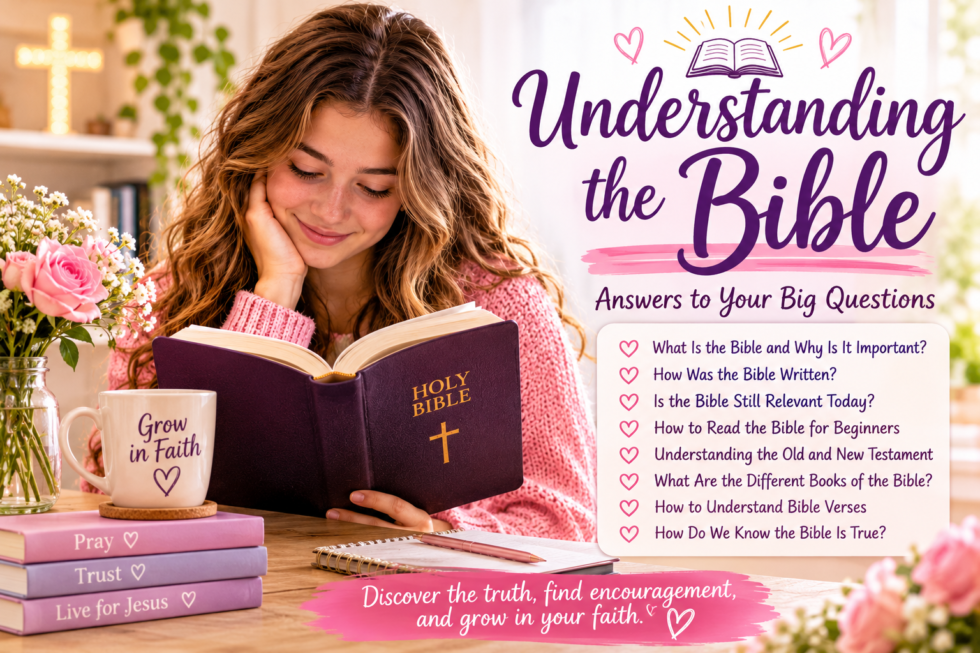
Understanding the Bible: A Beginner’s Guide to God’s Word
Have you ever picked up a Bible, opened it to a random page and wondered where on earth to begin?
Perhaps you’ve heard people quoting Scripture, talking about different Bible stories or sharing verses that have encouraged them, but you’ve never quite understood how everything fits together.
Or maybe you’ve been a Christian for some time but still find yourself asking questions about what the Bible actually means, how it came to be written and why it is so important to our faith.
If so, you’re certainly not alone!
The Bible is one of the most important parts of the Christian faith. It is more than an ancient collection of stories, historical accounts, poems and letters. Christians believe it is God’s inspired Word, revealing who He is, His love for humanity and His plan of salvation through Jesus Christ.
But understanding the Bible takes time, patience and a willingness to learn.
Whether you’re just beginning your journey with God or looking to deepen your understanding of Scripture, let’s explore what the Bible is, where it came from, why it matters and how you can begin reading it with confidence.
1. What Is the Bible and Why Is It Important?
The Bible is the sacred Scripture of Christianity. It is a collection of books written over many centuries by different human authors, inspired by God and brought together to communicate His truth and reveal His relationship with humanity.
The word Bible comes from a Greek word meaning books. This is quite fitting because the Bible isn’t actually one single book in the traditional sense. It is a collection of 66 books in most Protestant Christian traditions, divided into two main sections: the Old Testament and the New Testament.
Other Christian traditions, including Catholic and Orthodox churches, include additional books in their biblical canon.
So, why is the Bible so important to Christians?
Quite simply, it helps us understand who God is and how He wants us to live.
Through Scripture, we learn about:
- God’s character, love, holiness and faithfulness.
- His creation of the world and humanity.
- The relationship between God and His people.
- The consequences of sin and the need for salvation.
- Jesus Christ, His life, death and resurrection.
- God’s promises and His plan for humanity.
- How to live a life that honours and reflects Him.
The Bible also provides wisdom, encouragement, correction and guidance for everyday life.
Think about it this way: when you’re unsure which direction to take, feeling discouraged or struggling to understand something happening in your life, Scripture can help you see things from God’s perspective.
Psalm 119:105 says:
“Thy word is a lamp unto my feet, and a light unto my path.” (KJV)
What a beautiful picture of what God’s Word can be in our lives!
Just as a lamp helps us see where we’re walking in the dark, God’s Word helps guide us through life. It doesn’t necessarily show us every detail of what lies ahead, but it gives us direction for the next step.
The Bible isn’t simply something we’re meant to read. It’s something we’re invited to learn from, reflect on and put into practice.
2. How Was the Bible Written?
Have you ever wondered how the Bible came to exist? Who actually wrote it, and how did all those individual books become one collection?
It’s a fascinating story!
The Bible was written by many different human authors over a period of approximately 1,500 years. These authors came from different backgrounds and included kings, prophets, fishermen, shepherds, scholars and apostles.
They wrote in three main languages:
- Hebrew – the primary language of the Old Testament.
- Aramaic – found in certain portions of the Old Testament.
- Greek – the language in which the New Testament was written.
Although the books were written by different people at different times, Christians believe that God inspired their writing.
One of the most important verses explaining this is 2 Timothy 3:16:
“All scripture is given by inspiration of God…” (KJV)
This means Christians believe Scripture ultimately comes from God, even though He used human authors, their experiences, personalities and writing styles to communicate His message.
For example, the Gospel accounts were written by Matthew, Mark, Luke and John. Each presents the life and ministry of Jesus, with different perspectives and details that help us understand who He was and what He came to do.
The books of the Bible were written and preserved separately before being recognised and gathered into the collections Christians use today. The process of recognising which writings belonged in Scripture took place over time.
This is why the Bible is such an extraordinary collection. Although its books were written in different circumstances and historical periods, they tell one overarching story of God’s relationship with humanity and His plan of redemption through Jesus Christ.
3. Is the Bible Still Relevant Today?
With so much changing in the world, you might wonder whether a book written thousands of years ago can really have anything meaningful to say about modern life.
The answer is absolutely!
Although the Bible was written in a very different world from the one we live in today, the truths it teaches remain deeply relevant.
Think about some of the things we all experience:
- Feeling anxious about the future.
- Struggling with relationships.
- Dealing with disappointment.
- Searching for our purpose.
- Experiencing loneliness.
- Battling temptation.
- Trying to make the right decisions.
- Wanting to know whether we are loved and valued.
These are not new human experiences.
The Bible speaks into these areas through its teachings about love, forgiveness, wisdom, patience, compassion, courage and trusting God.
For example, Philippians 4:6–7 encourages believers not to be consumed by anxiety but to bring their concerns to God through prayer.
Proverbs 3:5–6 teaches us to trust in the Lord rather than relying entirely on our own understanding.
And John 13:34 teaches us to love one another as Jesus has loved us.
These principles are just as meaningful today as they were when they were first written.
However, understanding the Bible’s relevance also means recognising its historical and cultural context. Not every instruction was originally given to every person in exactly the same circumstances. We need to understand what a passage meant to its original audience before considering how its principles apply to our lives.
The world may change, but God’s character and the truth of His Word remain dependable.
As Hebrews 13:8 reminds us:
“Jesus Christ the same yesterday, and to day, and for ever.” (KJV)
4. How to Read the Bible for Beginners
If you’re new to reading the Bible, the sheer number of books, chapters and verses can feel a little overwhelming.
But here’s something important to remember: you don’t have to understand everything immediately.
Reading the Bible is a journey. Just like building a friendship, getting to know God through His Word takes time.
Here are some simple ways to get started.
Start with the New Testament.
Although Genesis is the first book of the Bible, I often recommend that beginners start with one of the Gospels.
The Gospel of John is a particularly lovely place to begin because it focuses on who Jesus is, His love, His teachings and why believing in Him matters.
You could also start with the Gospel of Mark if you prefer a shorter, fast-paced introduction to Jesus’ life and ministry.
Choose a Bible translation you can understand.
There are several English Bible translations available, including:
- KJV – King James Version.
- NKJV – New King James Version.
- NIV – New International Version.
- ESV – English Standard Version.
- NLT – New Living Translation.
Some use more traditional language, while others use more contemporary wording. Try a few and see which helps you understand Scripture most clearly.
Read a little at a time.
You don’t need to read five chapters every day to benefit from God’s Word.
Start with a chapter or even a few verses. Read slowly, think about what you’ve read and consider what it teaches you about God.
Ask questions as you read.
Don’t be afraid to question what you’re reading. In fact, asking questions is one of the best ways to develop a deeper understanding of Scripture.
Try asking yourself:
- What is happening in this passage?
- Who is speaking?
- Who is the original audience?
- What does this teach me about God?
- What can I learn from this?
- How can I apply this to my life?
Make time for reflection and prayer.
Before reading, ask God to help you understand His Word. After reading, take a few moments to reflect on what you’ve learned.
You could even keep a Bible journal where you write down meaningful verses, questions, prayers and things you want to remember.
Remember, the goal isn’t simply to finish reading a chapter. It’s to grow in your understanding of God.
5. Understanding the Old and New Testament
One of the first things you’ll notice when opening a Bible is that it is divided into two main sections: the Old Testament and the New Testament.
But what is the difference between them, and how do they fit together?
Let’s take a closer look.
The Old Testament
The Old Testament contains 39 books in the Protestant Bible and tells the story of God’s relationship with humanity before the earthly ministry of Jesus.
It begins with creation in Genesis and explores the history of God’s people, Israel, the giving of God’s law, the lives of kings and prophets, and God’s promises concerning a coming Saviour.
The Old Testament contains several different types of writing:
- The Law: The first five books, including Genesis, Exodus, Leviticus, Numbers and Deuteronomy.
- Historical Books: Accounts of Israel’s history, including Joshua, Judges, Ruth, Samuel and Kings.
- Poetry and Wisdom: Books such as Psalms, Proverbs, Job and Ecclesiastes.
- Major Prophets: Including Isaiah, Jeremiah, Ezekiel and Daniel.
- Minor Prophets: Twelve shorter prophetic books, including Hosea, Joel, Amos and Malachi.
The Old Testament helps us understand God’s holiness, justice, faithfulness, promises and desire for a relationship with His people.
It also introduces themes and promises that become important when we read about Jesus in the New Testament.
The New Testament
The New Testament contains 27 books in the Protestant Bible and focuses on Jesus Christ, His teachings, His death and resurrection, and the beginning and growth of the early Christian church.
It also teaches us how to live as followers of Jesus and look forward to God’s promised future.
The New Testament is divided into several sections:
- The Gospels: Matthew, Mark, Luke and John, which tell us about Jesus’ life and ministry.
- History: Acts, which describes the early church and the spread of the Gospel.
- Paul’s Letters: Letters written by Paul to churches and individuals, including Romans, Corinthians, Galatians and Ephesians.
- General Letters: Letters from other early Christian leaders, including James, Peter and John.
- Prophecy: Revelation, which contains visions concerning God’s ultimate victory and the fulfilment of His purposes.
The New Testament reveals Jesus as the promised Messiah and explains the meaning of His sacrifice and resurrection.
How Do They Fit Together?
The Old and New Testaments aren’t two unrelated stories.
They are connected through God’s unfolding plan of salvation.
The Old Testament introduces the problem of sin, God’s covenant relationship with His people and the promises of a coming Messiah.
The New Testament reveals Jesus as the fulfilment of those promises and explains how we can be reconciled to God through Him.
Understanding both sections helps us see the bigger picture of the Bible and appreciate how its message fits together.
6. What Are the Different Books of the Bible?
The Bible contains different types of books, and understanding their purpose can make reading Scripture much easier.
Each book has its own style, subject matter and message.
Here is a simple overview of the 66 books found in the Protestant Bible.
Old Testament – 39 Books
The Law (5 books):
Genesis, Exodus, Leviticus, Numbers and Deuteronomy.
Historical Books (12 books):
Joshua, Judges, Ruth, 1 Samuel, 2 Samuel, 1 Kings, 2 Kings, 1 Chronicles, 2 Chronicles, Ezra, Nehemiah and Esther.
Poetry and Wisdom (5 books):
Job, Psalms, Proverbs, Ecclesiastes and Song of Solomon.
Major Prophets (5 books):
Isaiah, Jeremiah, Lamentations, Ezekiel and Daniel.
Minor Prophets (12 books):
Hosea, Joel, Amos, Obadiah, Jonah, Micah, Nahum, Habakkuk, Zephaniah, Haggai, Zechariah and Malachi.
New Testament – 27 Books
The Gospels (4 books):
Matthew, Mark, Luke and John.
History (1 book):
Acts.
Paul’s Letters (13 books):
Romans, 1 Corinthians, 2 Corinthians, Galatians, Ephesians, Philippians, Colossians, 1 Thessalonians, 2 Thessalonians, 1 Timothy, 2 Timothy, Titus and Philemon.
General Letters (8 books):
Hebrews, James, 1 Peter, 2 Peter, 1 John, 2 John, 3 John and Jude.
Prophecy (1 book):
Revelation.
Each book contributes something different to our understanding of God, humanity, faith and salvation.
For example, Psalms is wonderful for learning how to express our emotions and prayers to God. Proverbs offers practical wisdom for everyday life, while the Gospels help us understand the person and teachings of Jesus.
You don’t need to read every book in order to begin learning from the Bible. You can explore different books depending on what you’re hoping to understand.
7. How to Understand Bible Verses
Have you ever read a Bible verse and thought, “I know the words, but what does this actually mean?”
Understanding Scripture isn’t always as straightforward as reading a sentence and taking it at face value.
Some passages are straightforward, while others require us to consider their historical setting, literary style and the wider message of the Bible.
Here are some helpful ways to understand Bible verses more accurately.
1. Read the verses around it.
Never rely entirely on one verse taken out of context.
Read the verses before and after it to understand what the writer is communicating.
2. Consider who wrote it and who it was written to.
Was it written to the nation of Israel, a particular church, an individual or a wider audience?
Understanding the original audience can help clarify the message.
3. Understand the type of writing.
The Bible contains history, poetry, prophecy, wisdom literature, letters and other forms of writing.
For example, Psalms frequently uses poetic language and imagery. Proverbs contains short statements of wisdom, while Paul’s letters often address particular questions and challenges within early Christian communities.
We need to recognise these differences when interpreting Scripture.
4. Compare Scripture with Scripture.
Sometimes another passage helps explain something you’re reading.
Look at what the rest of the Bible teaches about the same subject rather than building an understanding around one isolated verse.
5. Use a Bible commentary or study Bible.
Study resources can help explain historical background, unfamiliar words, cultural customs and difficult passages.
They are particularly helpful when you’re just beginning to understand Scripture.
6. Pray for understanding.
James 1:5 encourages us to ask God for wisdom.
Asking Him to guide your understanding is a wonderful part of developing your relationship with Him.
Most importantly, don’t become discouraged when you don’t understand something immediately. Keep learning, keep asking questions and give yourself time to grow.
8. How Do We Know the Bible Is True?
This is one of the biggest questions people ask about Christianity.
How can we know that the Bible is trustworthy? How do we know that its accounts have been preserved accurately? And why should we believe what it says?
These are important questions, and it’s perfectly reasonable to want to explore them.
Christian faith isn’t about pretending that questions don’t exist. It’s about being willing to investigate, learn and seek understanding.
Here are several reasons Christians consider the Bible trustworthy.
Its Historical Background
The Bible contains accounts connected to real places, people, kingdoms and historical events.
Archaeological discoveries have provided evidence for various places, customs and individuals mentioned in Scripture.
Although archaeology cannot verify every biblical event or theological claim, it helps illuminate the historical world in which the Bible was written.
The Preservation of Biblical Manuscripts
We have thousands of ancient biblical manuscripts and manuscript fragments that scholars can compare to study how the biblical text has been transmitted over time.
For example, the Dead Sea Scrolls, discovered in the twentieth century, include ancient copies of portions of the Old Testament.
These discoveries have helped scholars understand the history and preservation of biblical texts.
The Unity of Its Message
Although the Bible was written by many authors over many centuries, Christians recognise a consistent overarching message throughout Scripture.
From Genesis to Revelation, we see themes of creation, sin, God’s faithfulness, redemption, salvation and the restoration of humanity through Jesus Christ.
The Bible contains different perspectives, literary styles and historical settings, yet these contribute to one overarching story.
The Life, Death and Resurrection of Jesus
At the very heart of Christianity is the belief that Jesus Christ lived, died and rose again.
The New Testament contains accounts of His life and resurrection, written by early Christian witnesses and communities.
The resurrection is central to Christian belief. As Paul explains in 1 Corinthians 15, the Christian faith rests on the truth of Christ’s resurrection.
Personal Experience and Changed Lives
Throughout history, people have testified to how reading Scripture and following Jesus has transformed their lives.
Many Christians describe experiencing forgiveness, hope, peace, renewed purpose and a deeper understanding of God’s love through their relationship with Him.
Personal experiences are not historical proof in themselves, but they are an important part of why people find the message of the Bible meaningful and trustworthy.
Ultimately, Christians believe the Bible is true because it is God’s inspired Word.
It is worth exploring these questions honestly, reading Scripture carefully and learning from trustworthy historical and theological resources.
Faith doesn’t mean you will never have questions. It means you can bring those questions into your journey with God.
A Few Tips to Help You Grow in Your Understanding of the Bible
Now that we’ve explored what the Bible is and why it matters, here are a few simple habits you can begin incorporating into your everyday life.
- Set aside regular time for Scripture. Even ten minutes a day can help you develop a consistent habit.
- Start a Bible journal. Write down verses, questions, prayers and things you’ve learned.
- Don’t rush. Focus on understanding a small passage rather than trying to read as much as possible.
- Explore different books. Read the Gospels, Psalms, Proverbs and other books to discover the different ways God communicates through Scripture.
- Ask questions. If something doesn’t make sense, look for explanations from reliable Christian resources.
- Put what you learn into practice. Allow Scripture to influence your attitudes, choices, relationships and everyday decisions.
- Find a Christian community. Bible studies, church groups and mature Christian mentors can help you learn and grow.
Remember, understanding the Bible is not a race or a competition. You don’t have to know everything to begin developing a meaningful relationship with God.
Discovering the Beauty of God’s Word
The Bible is an extraordinary gift to humanity.
It tells us where we came from, helps us understand the brokenness of the world, reveals God’s incredible love and points us towards the hope we have through Jesus Christ.
It teaches us about forgiveness, grace, wisdom, courage, compassion and what it means to live a life that honours God.
But perhaps most importantly, it helps us get to know the One who created us and loves us beyond what we can fully comprehend.
If you’re just beginning your journey with Scripture, don’t feel overwhelmed by how much there is to learn. Start with one book, one chapter or even one verse.
Read it, reflect on it, ask questions and allow yourself to grow.
The more you explore God’s Word, the more you’ll discover about His character, His promises and His love for you.
And remember, you don’t need to have all the answers before you begin. You simply need a willing heart and a desire to know Him more.
Your journey of discovering God’s Word starts with one page, one verse and one step of faith at a time.
A Little Encouragement for Your Heart ♡
You don’t have to understand the whole Bible today. You just have to be willing to open it, learn something new and let God guide you one step at a time.
Scripture to Remember:
“Thy word is a lamp unto my feet, and a light unto my path.” – Psalm 119:105 (KJV)



Add A Comment