

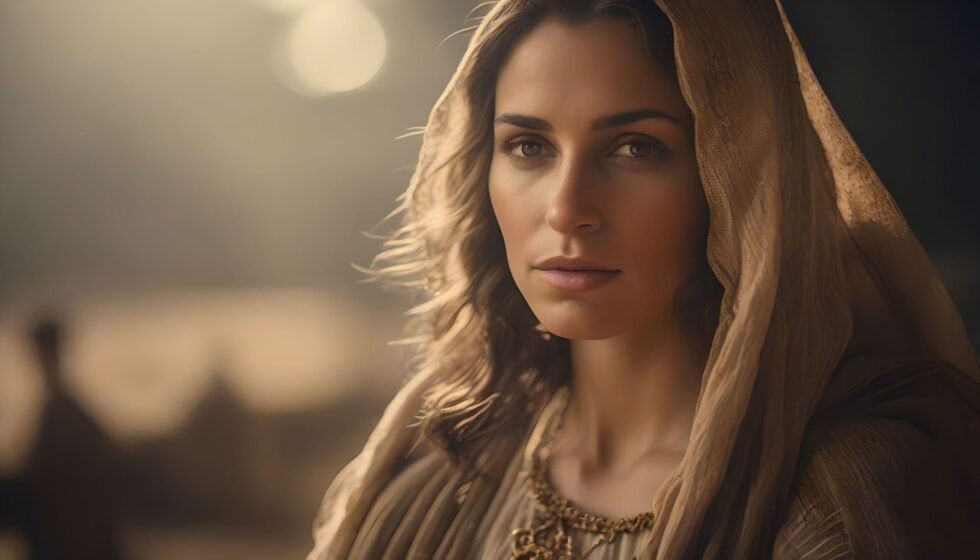
Hagar: Who is she?
The God Who Saw Me: Hagar’s Story
Based on Genesis 16 and 21, this retelling imagines Hagar reflecting on her life.
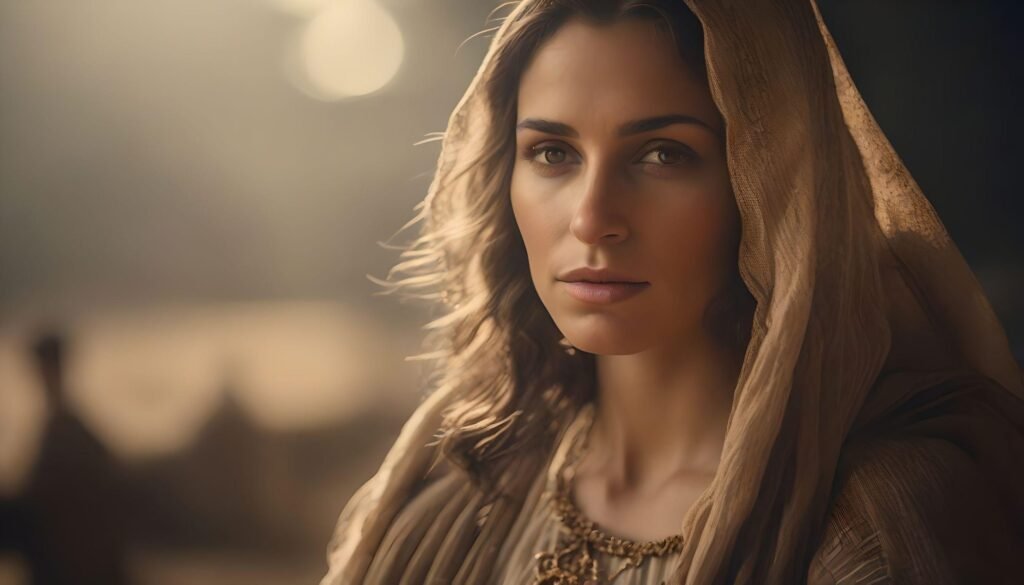
My name is Hagar.
Some remember me only as Sarah’s servant. Others know me as Abraham’s second wife, or as the mother of Ishmael. For much of my life, I was described by my relationship to someone else.
I was the Egyptian. The slave. The outsider.
But God knew my name.
A Life That Was Not My Own
I lived in the household of Abram and Sarai, whom you may know as Abraham and Sarah. God had promised Abraham that he would become the father of a great nation, but year after year passed, and Sarah remained childless.
In her desperation, she gave me to Abraham so that I might bear a child for her.
No one asked what I wanted.
My body became the solution to another woman’s sorrow. When I conceived, the household changed. Sarah saw contempt in my eyes, and perhaps it was there. Perhaps, for the first time, I felt that I possessed something she could not command into existence.
Whatever passed between us, her response was harsh. Life became unbearable, and so I ran.
Alone in the Wilderness
I fled into the wilderness, carrying Abraham’s child within me but possessing no plan for what would come next.
The desert is no gentle place for a pregnant woman alone. Every step took me farther from cruelty, but also farther from food, water, and safety. I did not know whether I was escaping death or walking toward it.
Then, beside a spring, the angel of the Lord found me.
Not Abraham.
Not Sarah.
Me.
He called me by name: “Hagar, servant of Sarai, where have you come from, and where are you going?”
I knew where I had come from. I had come from pain and humiliation. But where was I going? I had no answer.
God told me to return. Those words were not easy to hear, and I would never pretend they were. But He also gave me a promise: my descendants would be too numerous to count. The son within me would live, and I was to name him Ishmael, meaning God hears, because the Lord had heard my affliction.
The God of Abraham had listened to an Egyptian servant.
So I gave Him a name: El Roi, “the God who sees me.”
I had spent my life being looked at as property, a servant, and a means to an end. But God did not merely look at me. He saw me.
The Son God Heard
I returned and gave birth to Ishmael.
For years, he was Abraham’s only son. Then Sarah gave birth to Isaac, the child God had promised her. Joy entered her tent, but tension returned to mine.
One day, Sarah saw Ishmael with Isaac. Whatever she believed she saw, it was enough. She demanded that Abraham send us away.
This time, I did not leave by choice.
Abraham placed bread and a skin of water on my shoulders, and Ishmael and I were sent into the wilderness. When the water was gone, I laid my son beneath a bush. I moved away because I could not bear to watch him die.
I had survived being used, mistreated, and cast out. But the thought of losing my child broke what strength remained in me.
I wept.
Ishmael cried too.
And once again, God heard.
The God Who Still Saw Us
An angel called to me from heaven: “What troubles you, Hagar? Do not be afraid.”
God had heard the boy.
Then my eyes were opened, and I saw a well of water. It had been there, but despair had hidden it from me. I filled the water skin and gave my son a drink.
We lived.
God was with Ishmael as he grew. He became an archer and made his home in the wilderness. I found him a wife from Egypt, my own homeland, and watched God’s promise begin to unfold.
The world might remember Isaac as the son of promise, but that did not mean God had forgotten Ishmael. His blessing of one child did not make Him blind to the other.
What My Story Means
I was not the most powerful person in my story. Often, I had little control over what happened to me. Decisions about my body, my home, and my future were made by others.
Yet in the places where human beings failed me, God met me.
He found me when I fled.
He heard me when I suffered.
He called me by name when others treated me as property.
He opened my eyes when grief convinced me there was no hope left.
Mine is not a tidy story. It contains exploitation, rivalry, rejection, and fear. The Bible does not hide those wounds. But neither does it allow suffering to have the final word.
I was Hagar: an Egyptian, a servant, a mother, and an exile.
I was also the woman who named God.
And if my story teaches you anything, let it be this: when you feel unseen, unheard, or cast aside, the wilderness is not beyond God’s reach.
El Roi still sees.



Add A Comment